OpenPlay Player Profile
Lawrence Taylor: What Made Him Exceptional?
Made protection account for explosive edge pressure on every passing down.
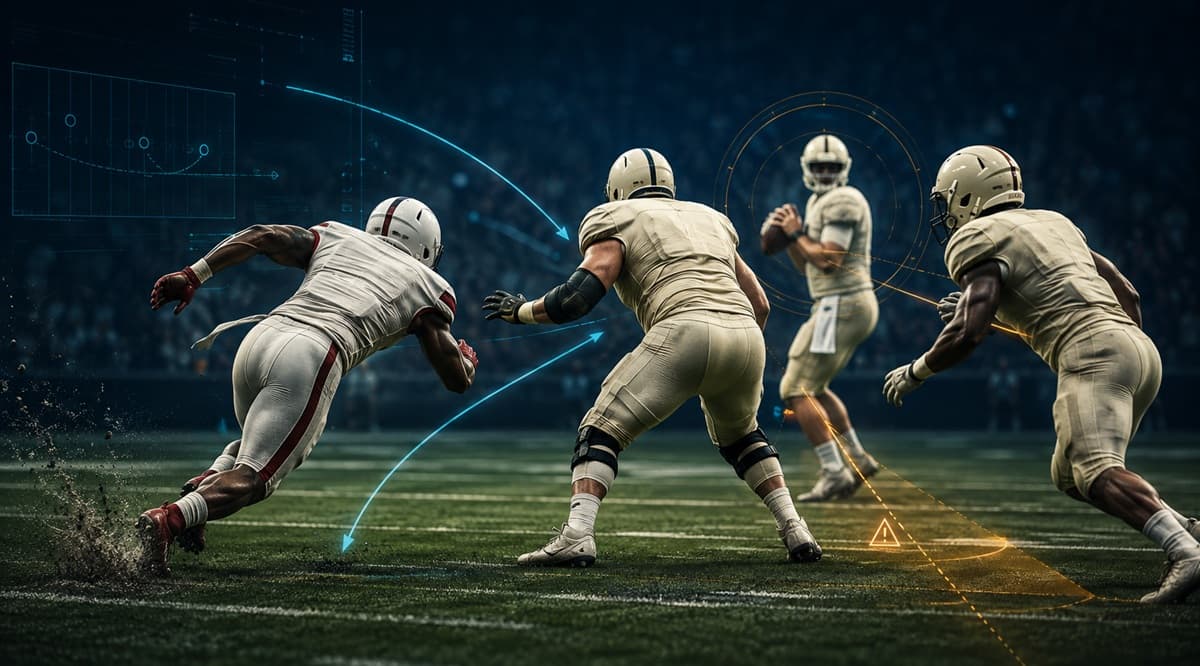
Lawrence Taylor didn't just rush the passer — he rearranged how offenses built their pass protection, on a nearly weekly basis, for over a decade. His career is the clearest example in NFL history of a single defender changing an offense's blueprint before the ball was even snapped, which is the central question his profile answers: how can one pass rusher change an offense's protection plan?
Taylor's first-step explosiveness and power made him a threat that a single offensive tackle often couldn't handle alone, and offenses that tried to block him with standard protection frequently paid for it. That reality forced a level of game-planning around one player that was, at the time, essentially unprecedented for a defender.
Career at a Glance
| Category | Information |
|---|---|
| Position | Outside linebacker |
| Primary team | New York Giants (1981–1993) |
| Era | 1981–1993 |
| Major honors | NFL Most Valuable Player (1986); NFL Defensive Player of the Year (1981, 1982, 1986); NFL Defensive Rookie of the Year (1981) |
| Career totals | 132.5 official sacks, 1,088 tackles, 9 interceptions |
| Super Bowl championships | Two (Super Bowls XXI, XXV) |
| Hall of Fame | Inducted 1999, first year of eligibility |
Why Taylor Was So Good
Taylor combined a rare first step with genuine power at the point of attack, meaning offensive tackles couldn't simply rely on technique or footwork to slow him down the way they could against a purely speed-based rusher. If a tackle set too far outside to handle his speed, Taylor had the strength to convert the rush inside; if a tackle set to handle power, his speed off the edge was often too much to recover from. That dual threat — speed and power both available on the same rush — is what made him uniquely difficult to block with a single defender.
The threat was consistent enough, snap after snap, that offenses had to plan for it as a persistent structural problem rather than an occasional matchup to manage.
How Taylor Played
Taylor lined up on the edge and used an explosive first step to attack the tackle's outside shoulder before the blocker could fully set his feet. If the tackle overcommitted to the edge, Taylor had a powerful bull rush and effective hand usage to convert speed into power and drive through the middle of the block. He played with relentless pursuit even when he didn't get home immediately, chasing plays from the backside and disrupting running plays as effectively as he disrupted the pass.
He also had rare instincts for a player with his physical tools, reading blocking schemes and quarterback tendencies quickly enough to time his rush around a snap count or anticipate a screen pass before it developed.
Taylor's rookie season set the pattern for what followed: a level of disruption that earned him both Defensive Rookie of the Year and Defensive Player of the Year honors in the same season, an unusual double that signaled he wasn't simply a talented newcomer but an immediate, established problem for opposing offenses. He backed that debut with first-team All-Pro recognition in each of his first nine professional seasons — a run of sustained dominance at a position that typically shows more year-to-year variance than that.
The Skills That Changed the Matchup
- First-step explosiveness — beating a tackle's set before the block could be established.
- Power — converting speed rushes into bull rushes that a single blocker often couldn't anchor against.
- Hand usage — disengaging from blocks quickly enough to finish plays that a less technical rusher would have been stalled on.
- Edge pressure — a persistent, weekly threat to the quarterback's blind side.
- Pursuit — disruptive value even on plays where he didn't record the sack, including run defense and chase-down tackles.
- Instincts — recognizing protection schemes and play design quickly enough to anticipate rather than just react.
What Opponents Had to Do Differently
Offenses facing Taylor frequently couldn't rely on a single offensive tackle to handle him in isolation, which meant committing additional resources — a tight end aligned to help with the block, or a running back staying in to chip him before releasing into a route — purely to slow him down. Every extra blocker assigned to Taylor was a blocker or a potential receiver unavailable elsewhere on the play, weakening the offense's plan in other areas even when the chip or extra block succeeded.
Quarterbacks also had to account for his timing specifically. Taylor's snap-count instincts meant offenses sometimes had to protect against him getting an unusually fast jump off the ball, changing cadence or shortening drop-back timing on the side he was rushing from.
Plays and Concepts That Fit His Strengths
Taylor's disruptive value showed up most clearly against standard drop-back passing situations, where his combination of speed and power against a tackle in pass-protection stance created the clearest one-on-one advantage. He was similarly effective against slide protection schemes that left a single blocker responsible for his side of the formation, since sliding an entire offensive line toward him still required a tackle to handle him individually if he attacked from the backside.
Against play-action and misdirection, his instincts and pursuit let him diagnose the run fake quickly enough to still affect the pass rush, rather than being fully removed from the play by the fake alone.
Compared to Aaron Donald, a defender who created a similar strategic effect from the interior decades later, Taylor's version of disruption came from the edge, where the space to build speed made him a threat to arrive from a defender's blind side entirely. Both players forced offenses to divert resources that would otherwise have been available elsewhere, but Taylor's specific threat — the unblocked defender arriving from behind — carries a distinct psychological weight for a quarterback that interior pressure, arriving from directly ahead, does not.
Where the Player Was Less Dominant
Taylor's game, especially later in his career, benefited from a level of physical dominance that inevitably declined with age and injury, and offenses that could commit multiple blockers to him on a consistent basis — a tactic that became more common as his reputation grew — could limit his individual sack production, even as the resources required to do so still benefited the rest of the Giants' defense. His off-field struggles during and after his career, well documented publicly, also affected stretches of his playing career, though they are not part of the football evaluation of his skill set.
OpenPlay Impact Profile
Archetype Game-Changing Edge Rusher
| OpenPlay Trait | Impact |
|---|---|
| Pass-rush burst | Exceptional |
| Pass-rush power | Exceptional |
| Hand usage | Elite |
| Pursuit | Elite |
| Run discipline | Strong |
| Coverage range | Moderate |
These descriptive traits are future-ready metadata for the planned Challenge Lab Impact Player concept—not numerical ratings or live simulation bonuses.
What Changes When He's on the Field?
Situation: 3rd-and-7 from the opponent's 38-yard line, offense in a standard drop-back passing formation with Taylor rushing from the quarterback's blind side.
Without the exceptional-player advantage
A standard pass rusher facing a single, well-prepared offensive tackle in one-on-one protection can be handled without requiring the offense to deviate from its base protection plan, keeping every eligible receiver in the route.
With this player's traits
The offense cannot trust a single tackle to handle Taylor alone, so a running back is assigned to chip him before releasing into his route, or a tight end stays in to help block. That extra blocker means one fewer receiver in the route concept, simplifying the coverage the quarterback has to read and reducing the offense's options on a down where every available option matters. Even if Taylor doesn't record the sack, his presence has already cost the offense a resource elsewhere on the field.
Coach Riley's Film Room
"You don't defend Lawrence Taylor with a game plan for Sunday. You defend him with a game plan for the whole week, because your whole protection scheme has to account for where he's lining up. I've drawn up chip blocks, slide protections, extra tight ends — and even then, some Sundays, none of it was enough.
What made him different from other great pass rushers is he didn't have one way to beat you. Set outside to stop the speed, and he'd run through you. Set inside to stop the power, and he was gone before you got your hands up. There's no clean technique answer to a player who's equally dangerous both ways."
What Lawrence Taylor Can Teach About Football
Taylor's career is the clearest illustration in football history of how a single defender's presence can shape an entire game plan before a single snap is played. His impact wasn't limited to sacks — it showed up in every blocker an offense had to divert toward him and every route that offense couldn't run because of it. For anyone learning to evaluate defensive players, Taylor is proof that disruption is a form of production, even when it doesn't appear directly in the box score.
Build the connections
Keep studying the matchup
Learn the concepts
Related plays
Related players
- Aaron DonaldCollapsed the pocket from the shortest path through leverage, burst, and power.
- Deion SandersRemoved usable space with elite man coverage and recovery speed.
- Ray LewisDiagnosed runs before the snap, directed the front seven, and closed downhill.
- Anthony MuñozWon one-on-one at left tackle so the offense could release every other eligible receiver.