OpenPlay Player Profile
Rob Gronkowski: What Made Him Exceptional?
Made defenses choose between run-stopping size and coverage speed.
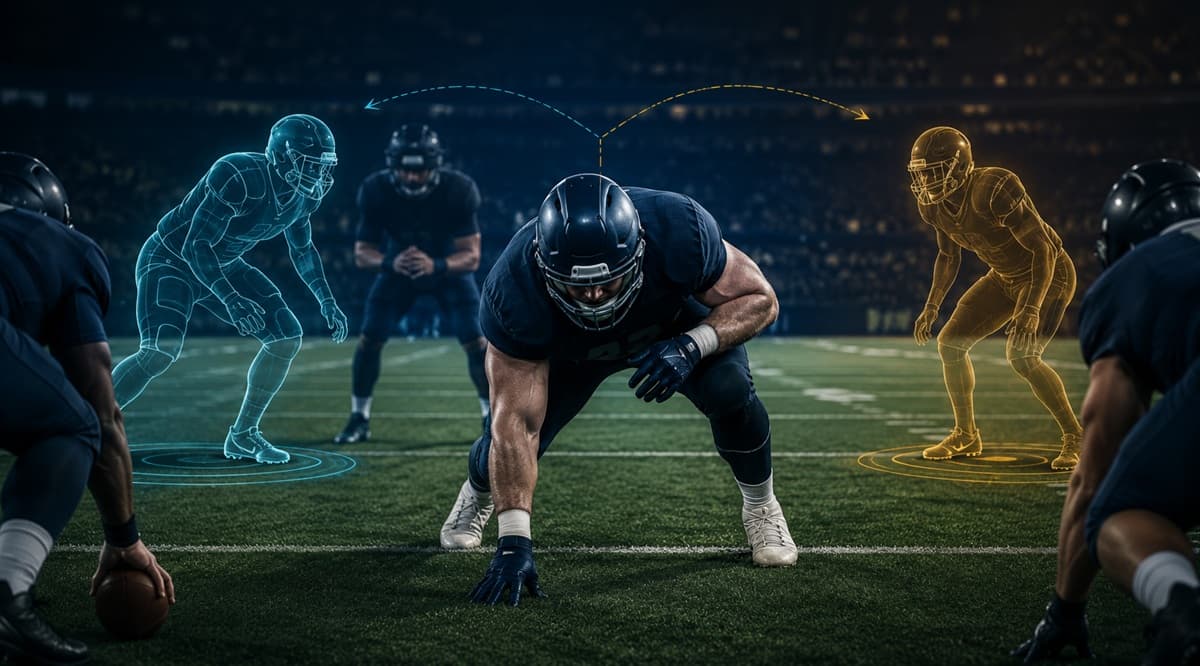
Every defense has to decide, before the snap, which of its personnel groups will handle a tight end. A linebacker can handle the blocking but may be overmatched in coverage. A defensive back can handle the coverage but may be overmatched trying to block him or tackle him after the catch. Rob Gronkowski's career is built around exploiting exactly that dilemma: why is a truly complete tight end such a difficult personnel problem?
Gronkowski was credible enough as an in-line blocker to be treated like an extra offensive lineman, and dangerous enough as a receiver to be treated like a featured target — sometimes on the same snap, depending on the call. That duality, more than any single statistic, is what made him one of the most disruptive matchup problems of his era.
Career at a Glance
| Category | Information |
|---|---|
| Position | Tight end |
| Primary teams | New England Patriots (2010–2018), Tampa Bay Buccaneers (2020–2021) |
| Era | 2010–2021 |
| Major honors | NFL 2010s All-Decade Team; first tight end to lead the NFL in receiving touchdowns (17, in 2011) |
| Career receiving | 621 receptions, 9,286 receiving yards, 92 receiving touchdowns |
| Super Bowl championships | Four |
| Hall of Fame | Not yet eligible (Hall of Fame eligibility begins five years after retirement) |
Why Gronkowski Was So Good
Gronkowski's value came from the fact that his offense never had to tip its hand based on his alignment. A defense watching him line up tight to the formation couldn't assume run or pass with any confidence, because he was equally capable of driving a defensive end off the ball on a running play or releasing into a route that a linebacker had no realistic chance of covering. That ambiguity, repeated snap after snap, made defensive personnel decisions genuinely difficult in a way that a pure blocking tight end or a pure receiving tight end never could.
His size and contested-catch ability compounded the problem. Even when a defense correctly identified a passing play and got a defender into coverage, Gronkowski's combination of size, strength, and body control often let him win the catch anyway, particularly in the red zone, where space is already limited and size matters more.
How Gronkowski Played
As a blocker, Gronkowski played with the technique and physicality of an offensive lineman, capable of sealing edge defenders on running plays or handling pass-rush assignments in protection — a rare combination for a player who also ran a full route tree. As a receiver, his routes were relatively simple compared to a wide receiver's, but his size and strength made up the difference: he could out-position smaller defensive backs on seam routes, shield the ball from linebackers with poor coverage instincts, and consistently win the ball in contested situations near the goal line.
After the catch, his combination of size and surprising open-field agility for his frame made him difficult to bring down with a single tackler, adding yardage that a smaller receiver in the same spot often couldn't generate.
Gronkowski's rapport with Tom Brady, first in New England and later in Tampa Bay, also mattered strategically. Because Brady trusted Gronkowski's ability to win contested throws, he could target him in tight windows that would have been low-percentage decisions with a different receiver — particularly in the red zone, where the two connected repeatedly across their careers together, including in Super Bowl LV, where Gronkowski's two early touchdown catches helped establish the game's outcome.
The Skills That Changed the Matchup
- In-line blocking — functioning as a credible extra lineman on running plays, changing the math of the box count.
- Seam-route threat — a size and speed combination that punished linebackers in coverage and safeties who arrived late.
- Contested catch ability — winning jump-ball and red-zone situations through size and strength.
- Yards after contact — breaking or absorbing arm tackles that would stop a smaller receiver.
- Personnel ambiguity — forcing a defense to choose its answer before knowing whether the play was a run or a pass.
- Red-zone value — a uniquely difficult matchup in the compressed space near the goal line.
What Opponents Had to Do Differently
Defenses facing Gronkowski had to make a personnel decision that had no clean answer. Covering him with a linebacker generally meant a size and speed mismatch in the passing game; covering him with a smaller defensive back generally meant a size and strength mismatch both in contested catches and, if the defensive back had to set the edge, in run defense. Some defenses used a safety in a hybrid role specifically to account for him, which itself pulled a defender away from other coverage responsibilities.
Because his blocking was credible, defenses also couldn't simply treat his presence in the formation as a certain passing situation, which limited how aggressively they could substitute personnel or adjust their run-pass expectations based on his alignment alone.
Plays and Concepts That Fit His Strengths
Gronkowski was especially effective on seam routes, where his combination of size and speed created a difficult vertical matchup against both linebackers and safeties. He was also a frequent target in the red zone on plays designed around his size advantage in tight spaces, including fade and back-shoulder concepts where a smaller defender had little recourse.
His blocking made him a natural fit in heavier personnel packages and running concepts that used him as an in-line blocker before releasing him late into a route — a design that took advantage of exactly the ambiguity that made him difficult to defend.
Compared to a traditional wide receiver, it's worth being precise about why Gronkowski belongs in a different category despite his effect on coverage. His routes, his alignment, and his blocking responsibilities all functioned within the tight end position rather than as an oversized receiver playing a receiver's role. The mismatch he created wasn't about winning a footrace against a cornerback; it was about the defense never having a personnel group on the field that was correctly built to handle both halves of his game at once.
Where the Player Was Less Dominant
Gronkowski's route tree, compared with a dedicated wide receiver's, was relatively limited, and he was not typically used to create separation through pure route-running precision the way a receiver like Jerry Rice was. His long-term availability was also affected by a series of injuries throughout his career, which limited his snap counts and occasionally his effectiveness in certain seasons. Against a defense with a genuinely elite coverage linebacker or safety capable of matching both his size and his athleticism, his advantage narrowed, though such matchups were relatively rare.
OpenPlay Impact Profile
Archetype Complete Tight End
| OpenPlay Trait | Impact |
|---|---|
| Blocking | Exceptional |
| Contested catch | Exceptional |
| Catch radius | Elite |
| Yards after contact | Elite |
| Route precision | Strong |
| Route separation | Moderate |
| Vertical speed | Moderate |
These descriptive traits are future-ready metadata for the planned Challenge Lab Impact Player concept—not numerical ratings or live simulation bonuses.
What Changes When He's on the Field?
Situation: 3rd-and-7 from the opponent's 38-yard line, offense in a run-heavy personnel grouping with Gronkowski lined up in-line.
Without the exceptional-player advantage
A defense facing a standard tight end in this personnel package can reasonably assume a run is more likely and adjust its front and coverage shell accordingly, playing tighter to the line of scrimmage and committing fewer resources to deep coverage.
With this player's traits
Because Gronkowski is a credible blocking threat in the same alignment, the defense can't lean on that assumption. It has to prepare for either outcome, which often means keeping a safety or linebacker in a more conservative position than the actual play requires. When the play turns out to be a seam route, that hesitation costs the defense the extra half-step it needed to get a second defender involved, and the down is converted against a defense that was genuinely unsure what it was defending against until the ball was snapped.
Coach Riley's Film Room
"The hardest conversations I ever had with a defensive coordinator were about Gronkowski. Every single week: who covers him? Because if you put a linebacker on him, you're praying he doesn't run a seam route. If you put a safety on him, you're praying he doesn't have to block your best edge rusher. There was no clean answer, and offenses love a problem that has no clean answer.
What people miss is how good he was without the ball. He'd wash a defensive end five yards off the ball on a running play like it was nothing, then line up the exact same way the next series and torch a linebacker over the middle. You couldn't game-plan him with one player. You had to game-plan him with a whole personnel philosophy."
What Rob Gronkowski Can Teach About Football
Gronkowski's career demonstrates that mismatches aren't only created by speed or separation — they can be created by genuine dual-threat competence at two different jobs that a defense normally assigns to two different types of players. For anyone learning football strategy, his game is a clear illustration of how personnel decisions, made well before the snap, shape what a defense can and can't do once the ball is live.
Build the connections